
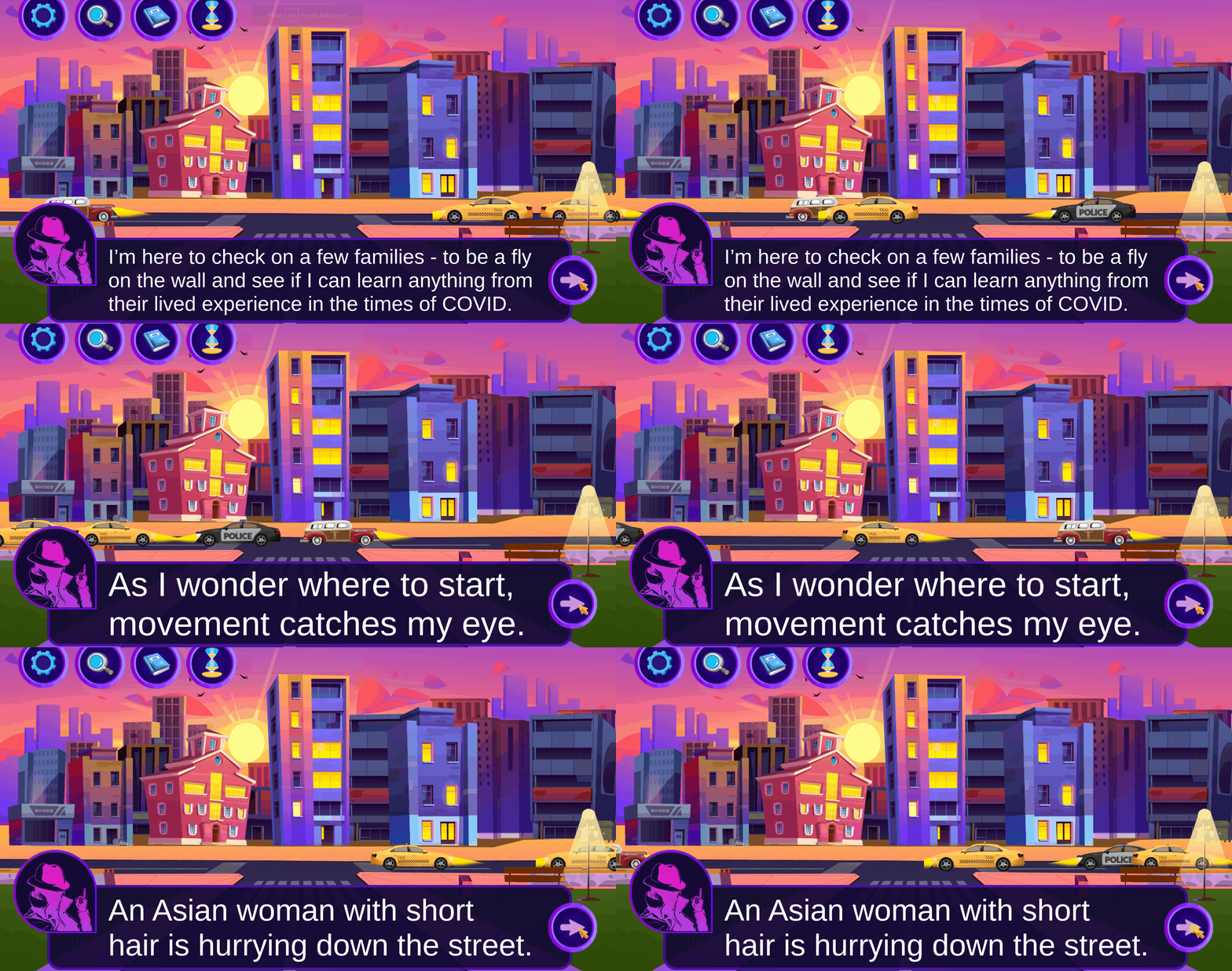
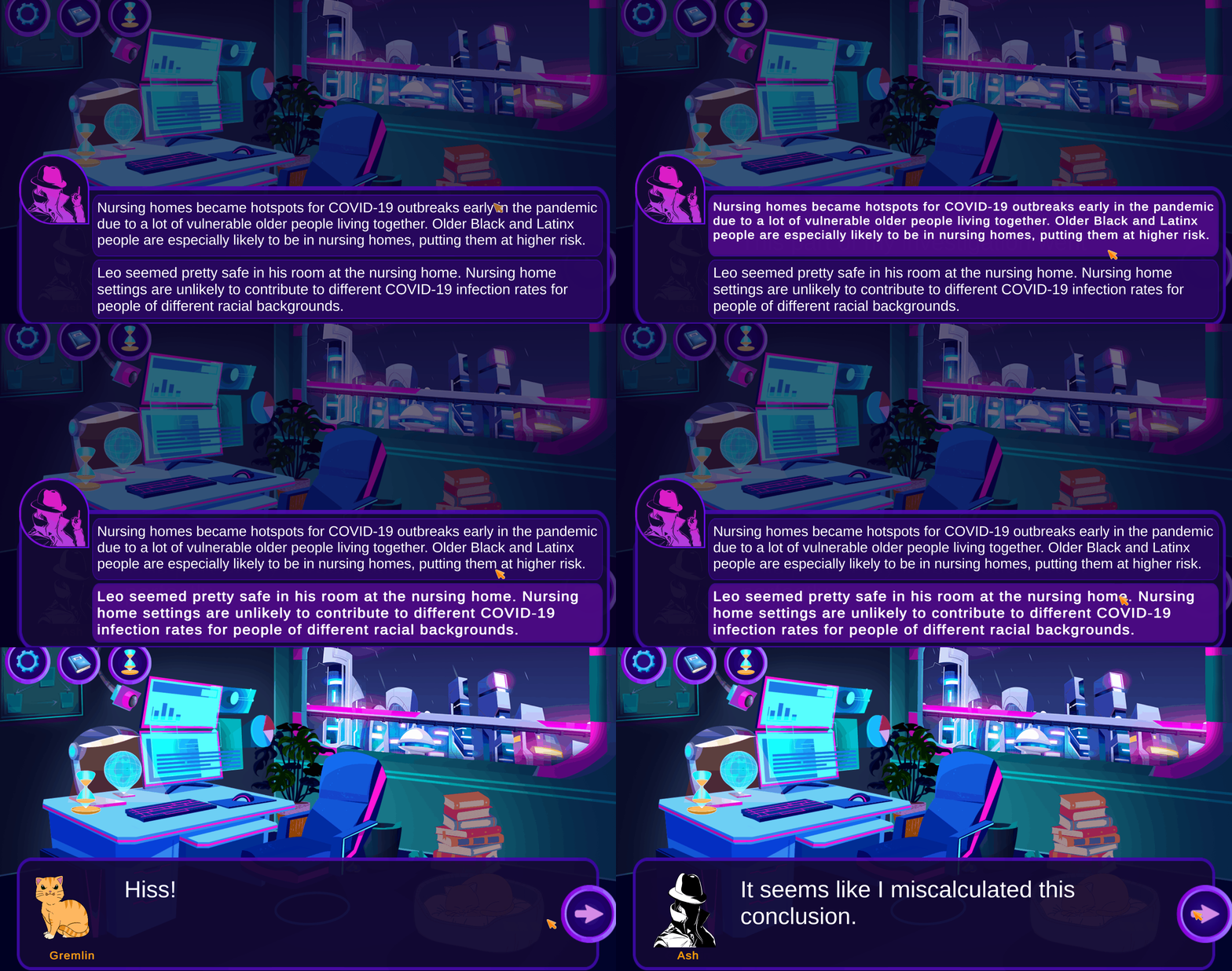
This game is an educational tool for middle-school teachers to use in classrooms to teach students about structural racism in the United States through the lens of COVID-19. It was commissioned by the non-profit organization, EmbraceRace. As a serious game, I worked closely with both the client and the researchers to ensure the game’s design fulfilled its educational purpose.


My personal design goals were:
- Create an accessible and enjoyable experience for players, despite the serious topic of the game, and empower them to make changes within their own day-to-day lives to act against racism.
- Use gameplay to educate and encourage empathy within players, rather than simply writing out information.
- Create a tool for teachers. Games cannot replace a teacher; rather, this is a tool for teachers to use. The game creates an output of each student’s choices, answers, and journal entries, serving as content for teachers to review.
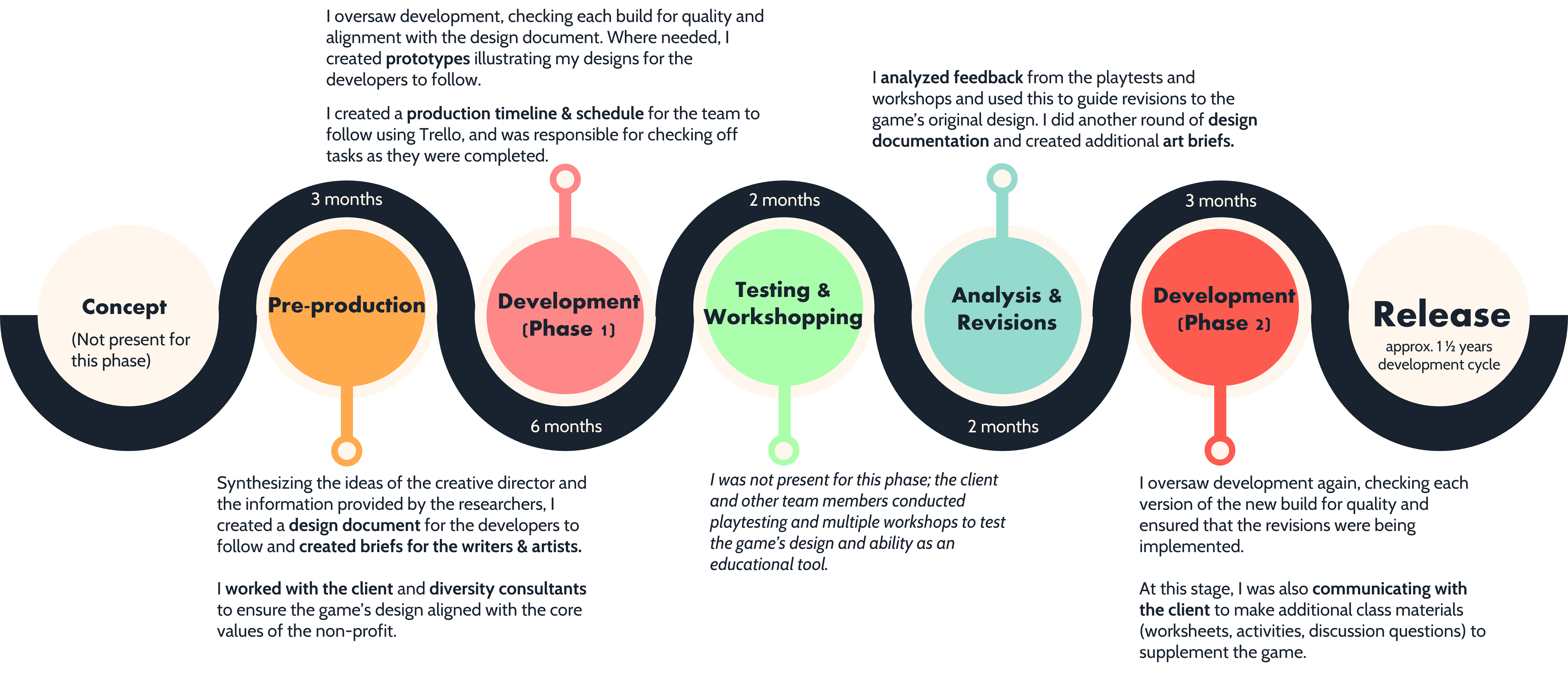
Timeline & Responsibilities
Game Design
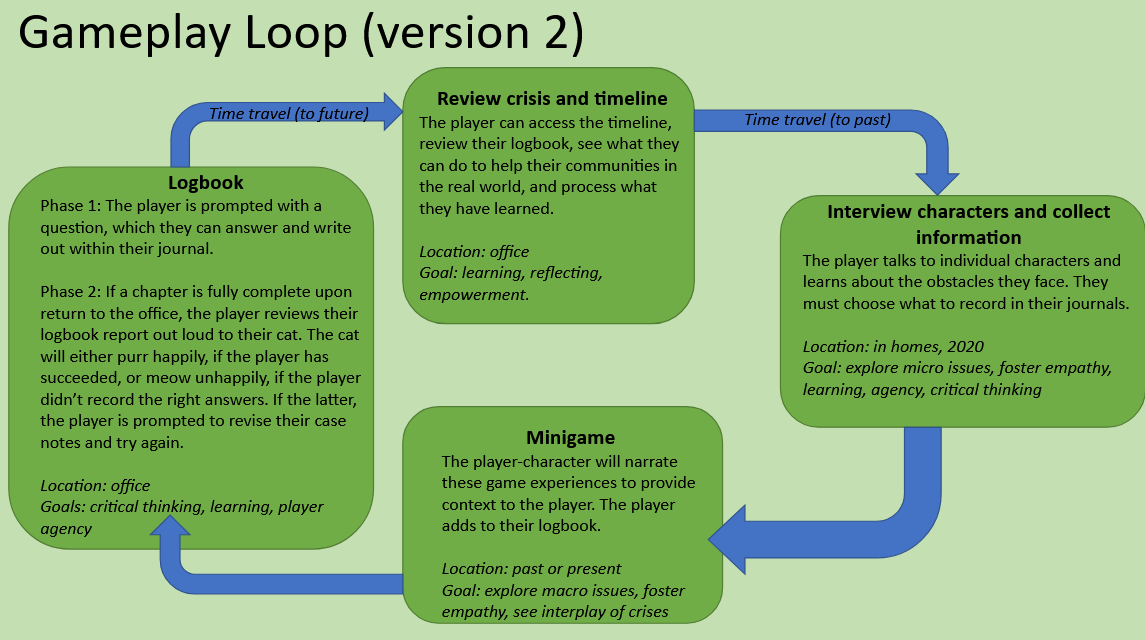
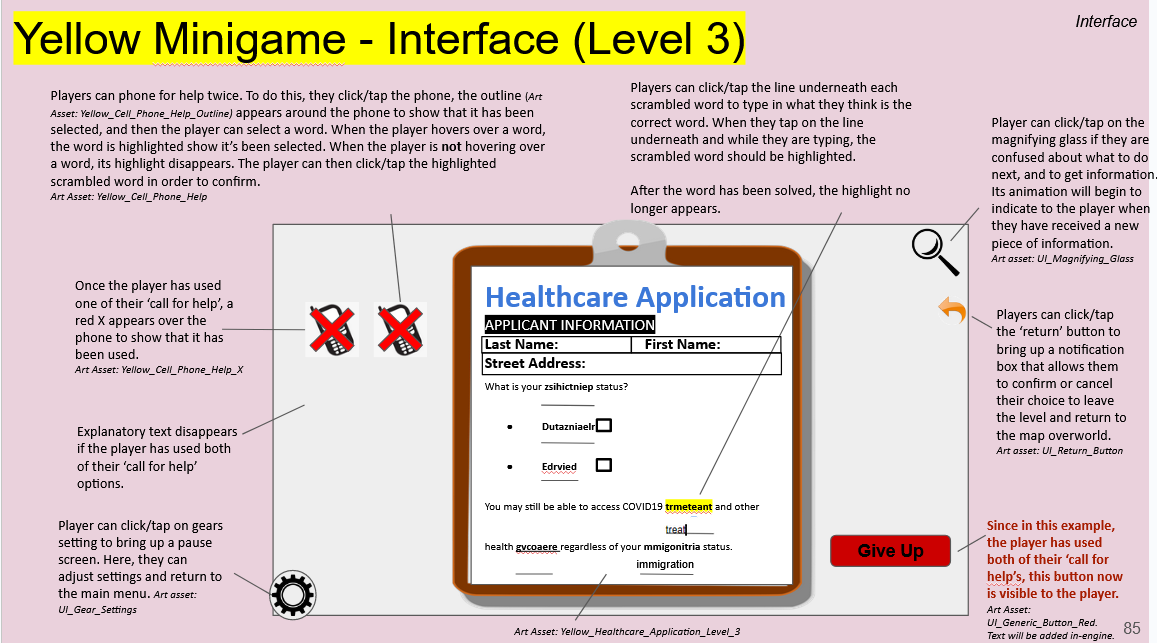
My primary task for this game was to create the game design document (GDD), created in PowerPoint / Google Slides for a total 300+ slides in addition to supplementary material (scripts, artist briefs, etc). I treat GDDs as living documents, updating them as development continues and the team and client collaborate to iterate upon the design.
My design process begins with pen and paper:
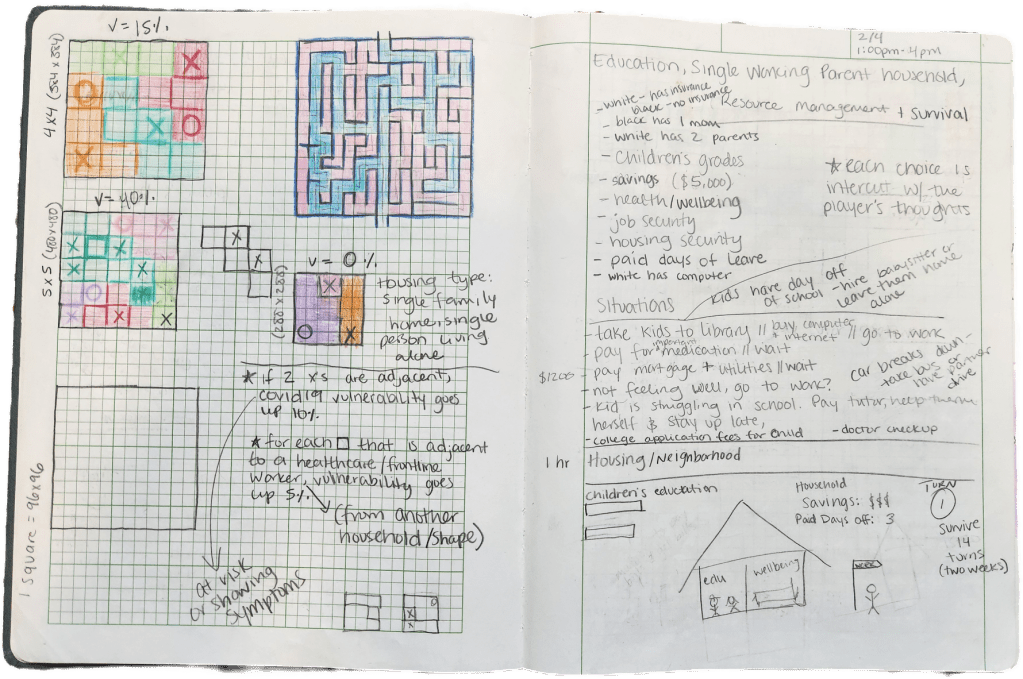
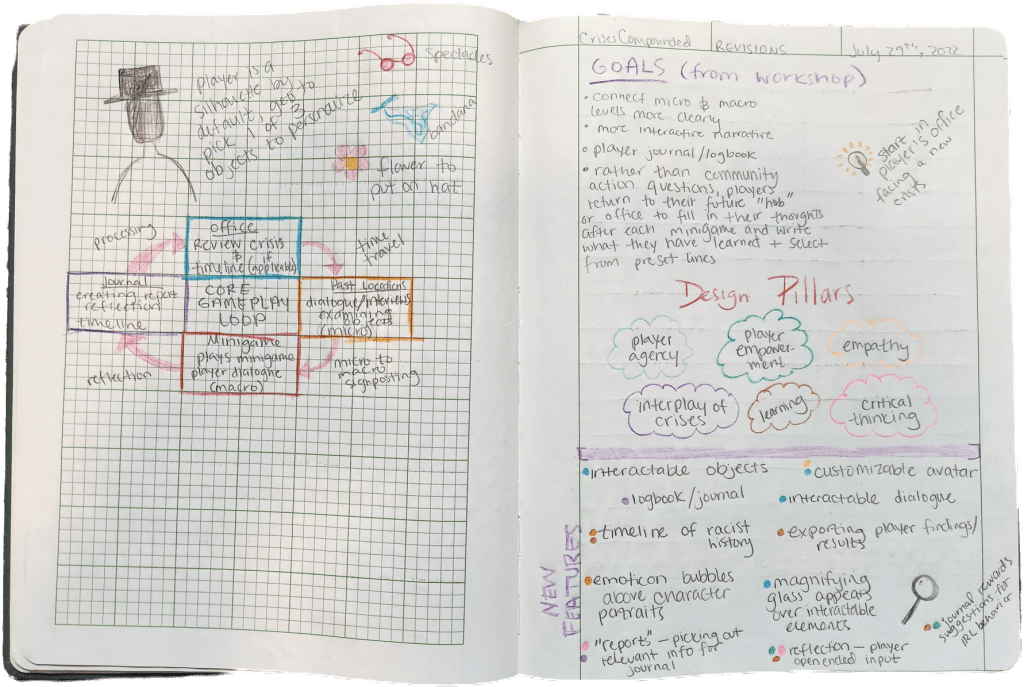
…and then moves to a digital space, which is the deliverable I provide. Below are examples of the digital design documentation I did for this project:

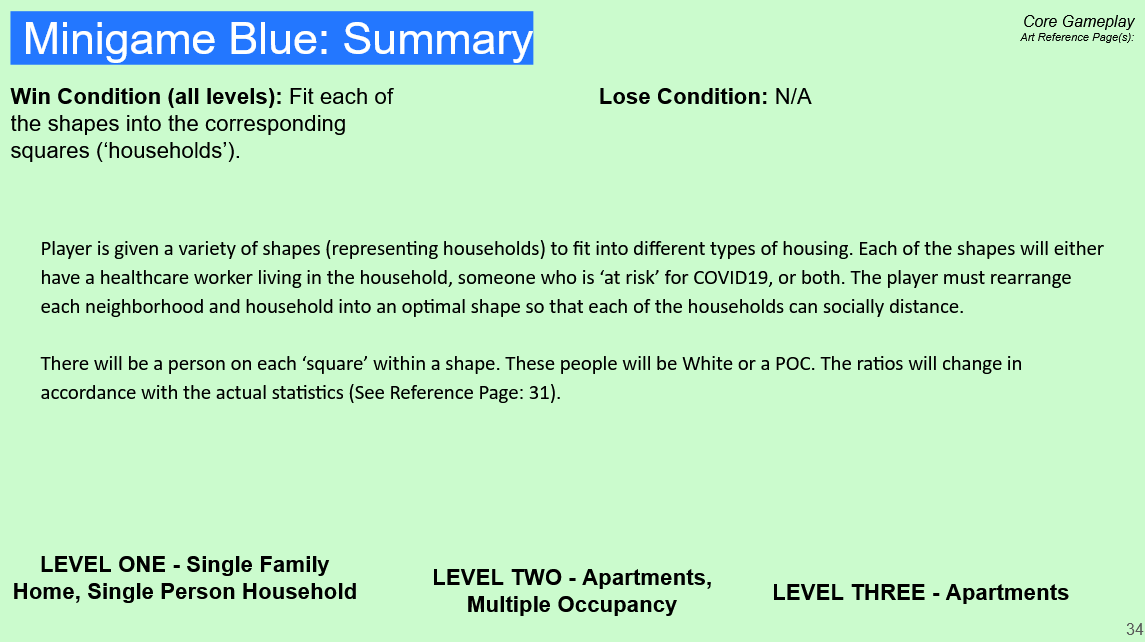
Mini-game Example 1
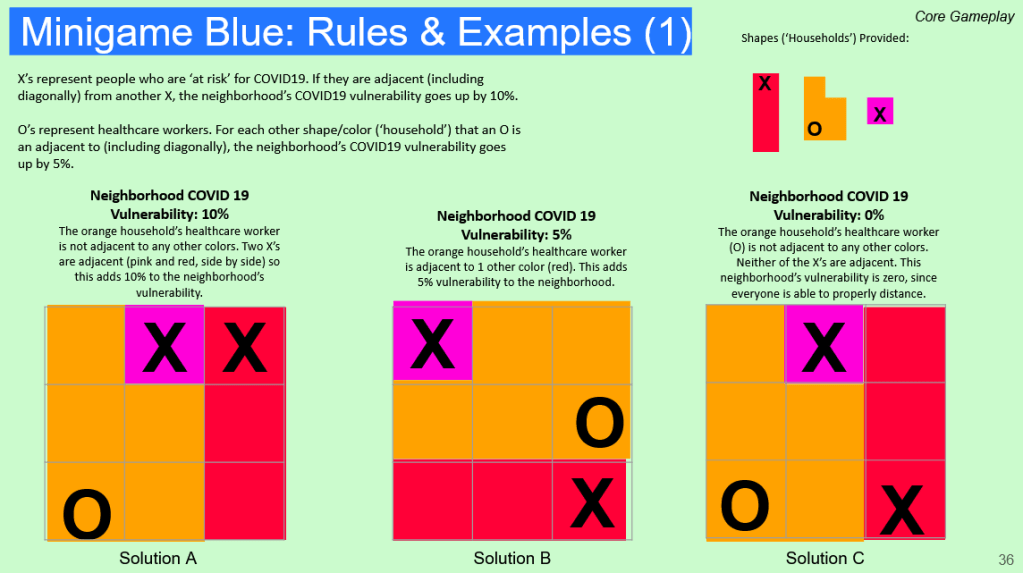
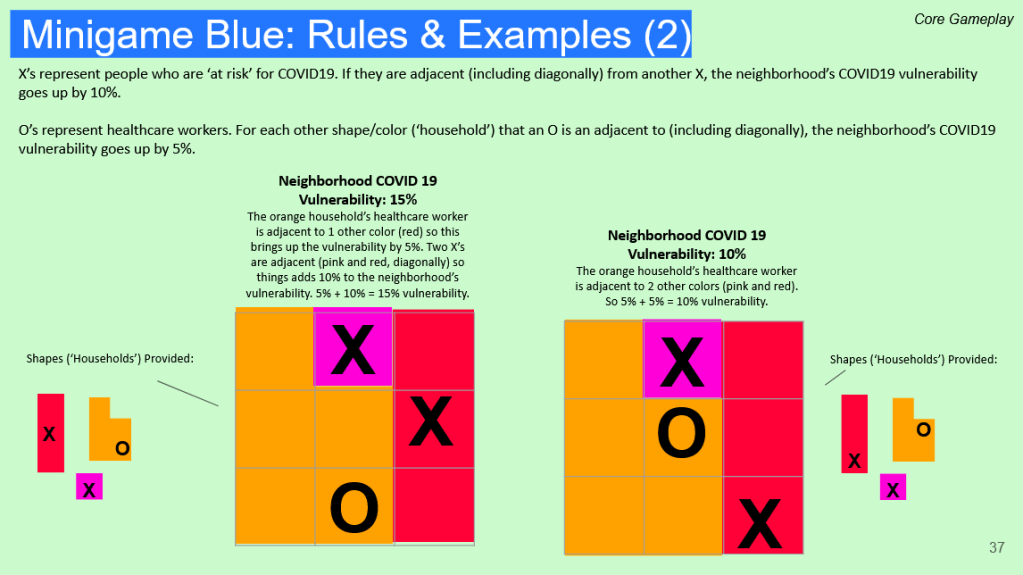
This mini-game depicts how a person’s housing situation can impact them during times of crisis; in this case, their vulnerability to contracting COVID-19.
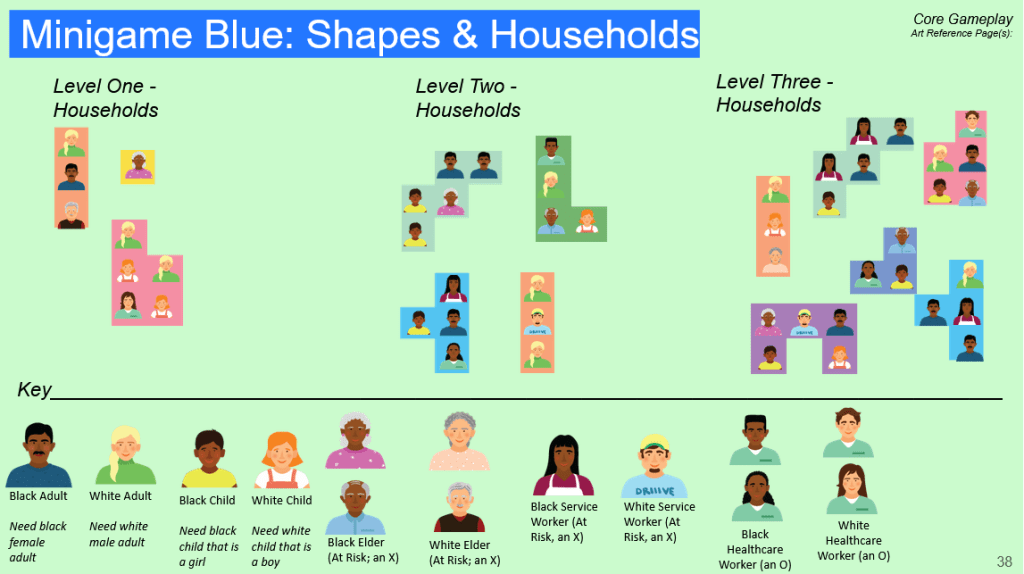
People of color are more likely to live with healthcare & front-line workers, in multi-family housing, and in inter-generational households. This causes these communities to be more susceptible to the virus than white families, who are more likely to live in single-family housing. This was depicted through the game’s mechanics, as each shape was representative of a household (based on actual statistics) and each level/puzzle depicted a different kind of housing: the smaller grids (single-family housing) could be solved without ever increasing the neighborhood’s vulnerability; whereas the larger grids (apartment buildings, like the one depicted below) could not be solved without increasing the neighborhood’s vulnerability.




Mini-game Example 2
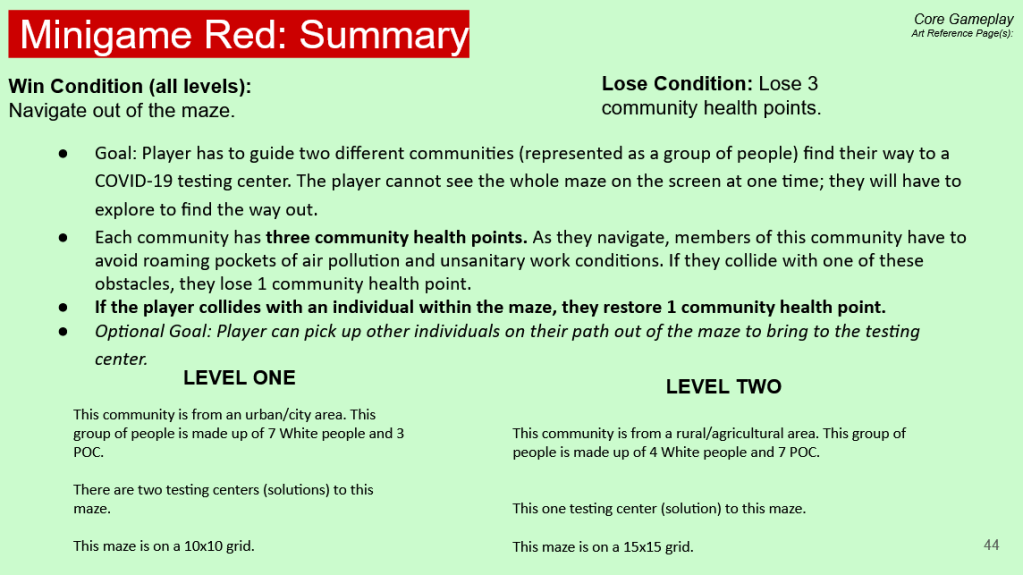
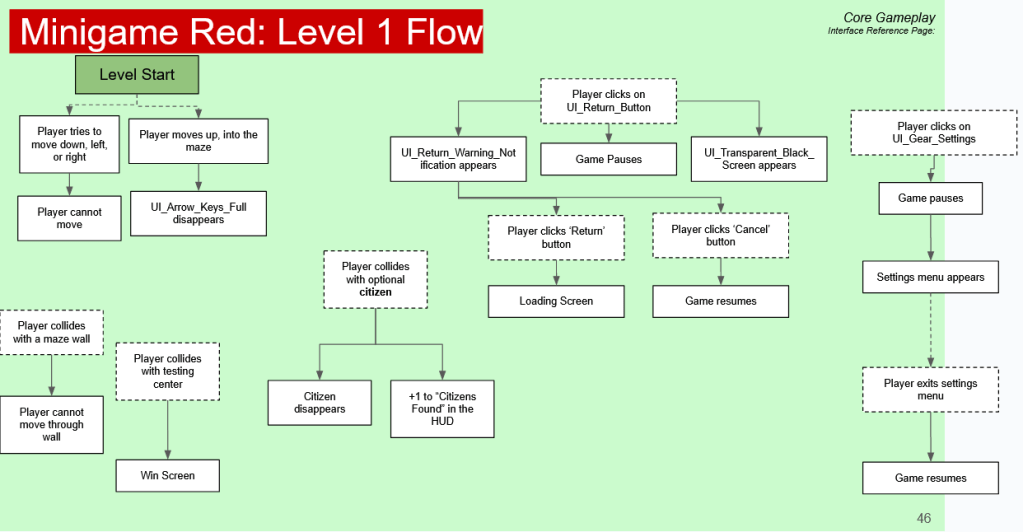
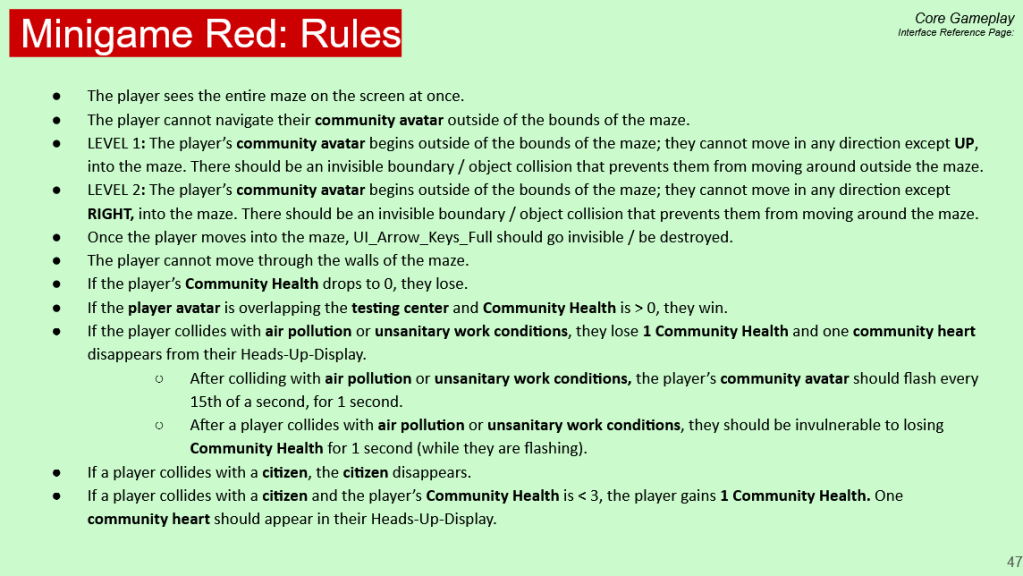
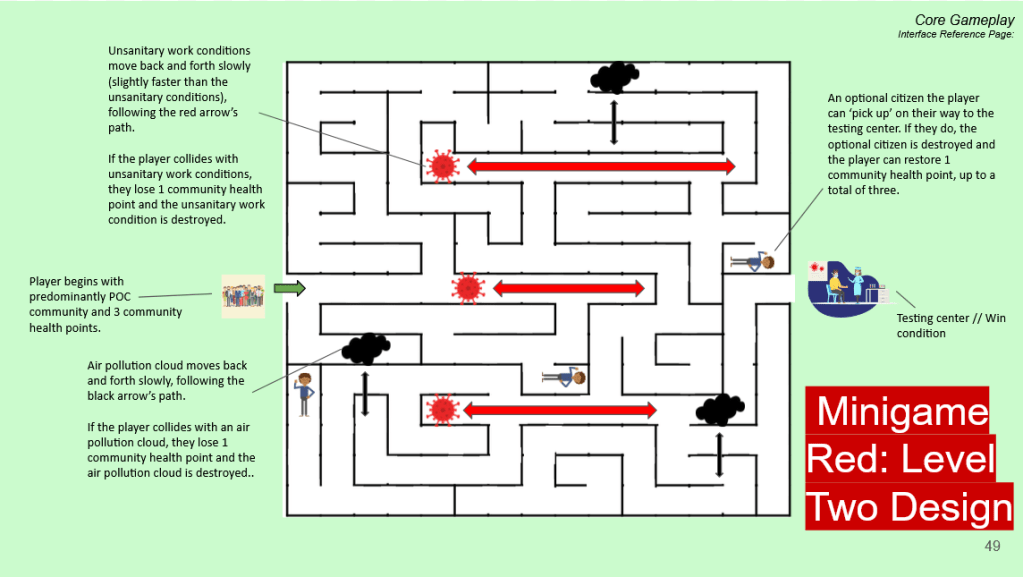
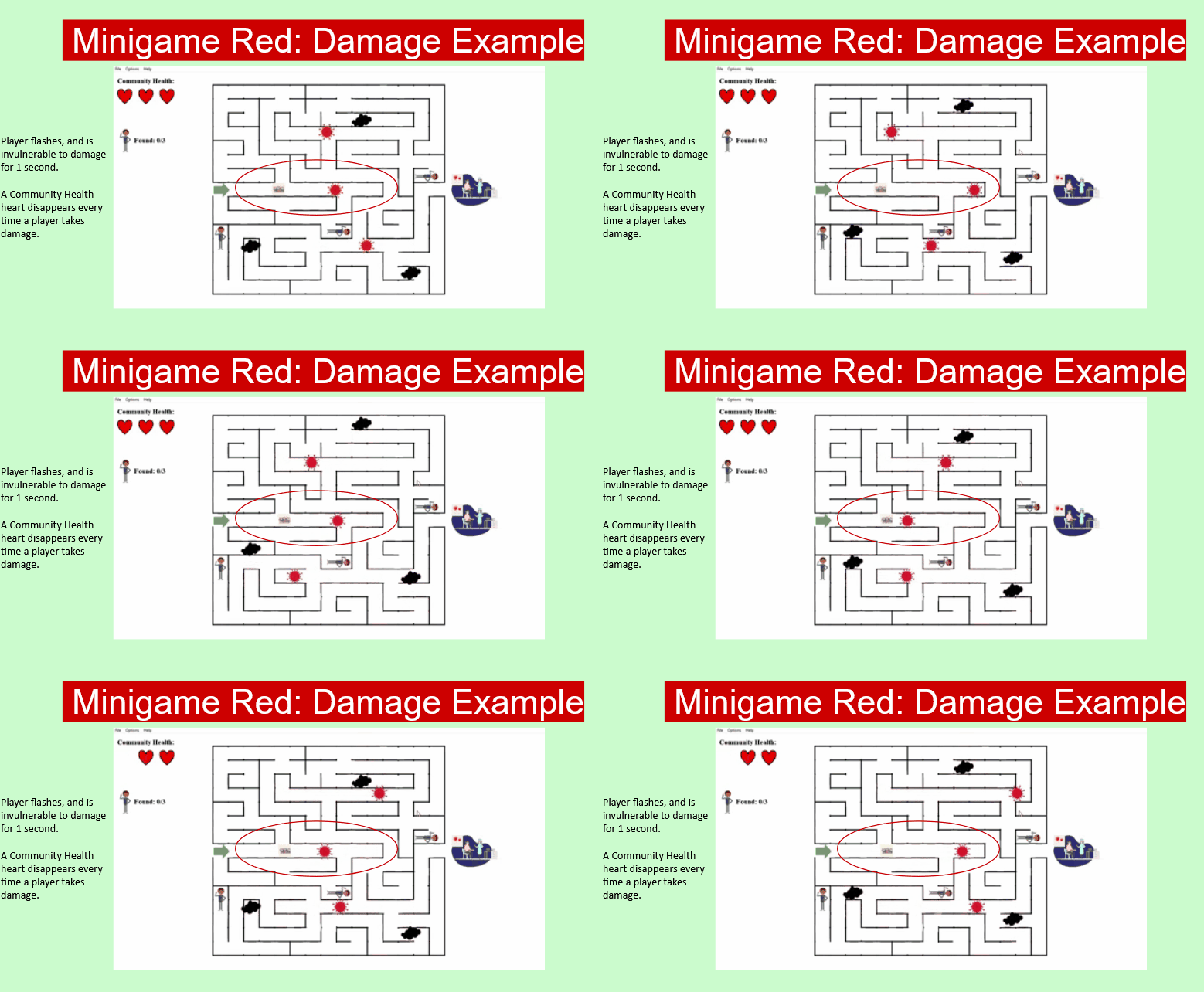
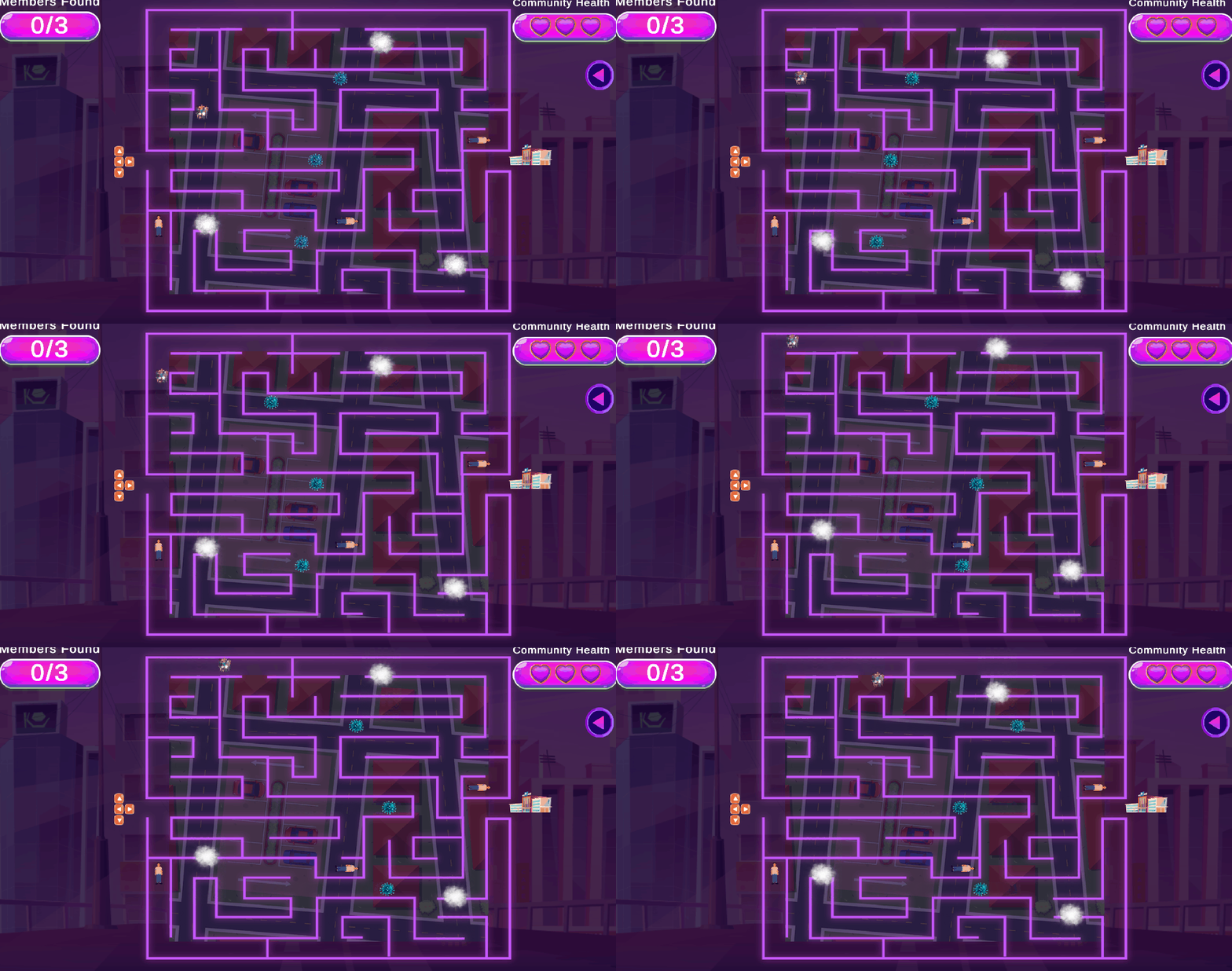
This mini-game illustrates how proximity to testing centers, air quality, and living in a rural vs. an urban area can shape a community’s vulnerability to COVID-19.
The player must navigate a group of people to a testing center, avoiding obstacles like poor air quality and the COVID-19 virus. The first level (not shown) is a smaller maze with many solutions (depicted as a testing center) and few hazards, showing how it is easier for people in urban areas to get tested and receive treatment. The second level (shown below) is a larger maze with only one solution and more hazards. The size of the mazes are reflective of actual average distances from testing centers for rural vs. urban communities.

 Ashley Rezvani